
In warehouse operations, battery performance plays an essential role in maintaining efficiency, safety, and workflow continuity. From narrow aisle handling to heavy-duty multi-shift transport, forklifts depend on stable power to support daily material movement without unnecessary interruption. As warehouses continue to pursue higher throughput and better space utilization, choosing the right forklift battery becomes increasingly important. A suitable battery system can help improve runtime, reduce maintenance pressure, and support more flexible charging routines. Understanding how different forklift battery solutions fit different warehouse demands can therefore help businesses make more practical long-term decisions.
Why Battery Performance Matters in Warehousing
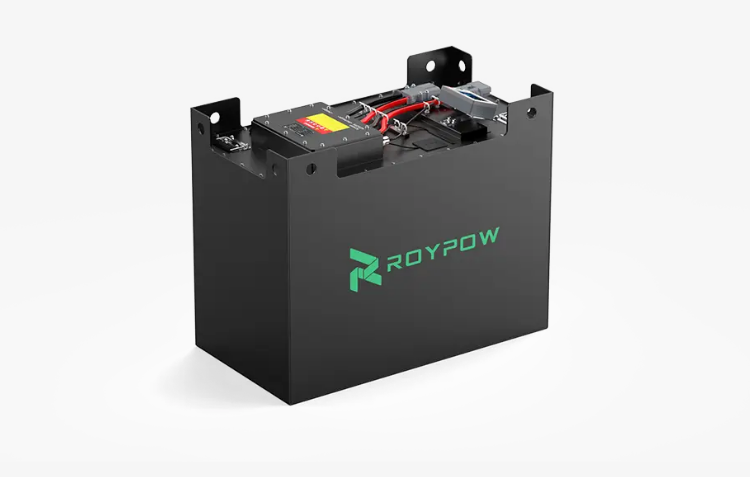
Forklift batteries directly affect how smoothly warehouse equipment performs throughout the day. In environments where forklifts are expected to move continuously, even small drops in battery efficiency can lead to slower operations, more downtime, and less predictable equipment performance.
Compared with traditional lead-acid systems, lithium battery solutions are increasingly valued for their ability to provide more stable output across the full shift. Instead of experiencing noticeable power decline as energy is consumed, lithium systems are designed to maintain more consistent discharge performance. This is especially useful in warehouse settings where precision, timing, and uninterrupted equipment availability all matter.
At the same time, battery choice also influences maintenance routines. Reducing manual servicing requirements can help businesses save labor time while keeping equipment in use for longer periods.
36 Volt Forklift Batteries for Narrow Aisle Operations
For warehouses that rely on narrow aisle forklifts and high-rack stackers, a 36 volt battery for forklift applications can be an effective solution. These operations typically require precise maneuvering, stable control, and consistent power delivery in confined spaces. In such conditions, battery stability matters as much as capacity.
A 36 volt system is often well suited to this type of work because it can support:
- Consistent voltage output for smoother handling
Stable discharge helps operators maintain better control during precision movement in tight warehouse layouts - Reliable performance throughout the shift
Unlike traditional batteries that may show gradual power loss, lithium systems are better able to sustain steady operation over time - Flexible opportunity charging
Batteries can be topped up during breaks or idle windows, helping improve equipment availability without creating excessive charging delays
This makes 36 volt lithium battery systems particularly practical for operations where maneuverability and uninterrupted daily use are both important.
When 48 Volt Forklift Batteries Offer More Advantage
For heavier-duty warehouse tasks, a 48 volt forklift battery may provide stronger support. When forklifts are expected to handle larger loads, operate for longer hours, or perform across multiple shifts, the additional power and energy density of a 48 volt system can make a noticeable difference.
Rather than treating all forklift applications the same, it is more useful to look at where higher-voltage solutions create operational value. In many warehouses, a 48 volt system helps improve efficiency in the following ways:
- Better support for intensive workloads
Heavier material handling tasks often place greater demand on battery output. A 48 volt battery is generally better equipped to deliver the power needed for sustained, high-intensity operation - Faster recharge cycles
In operations with limited downtime between shifts, shorter charging periods can help keep forklifts available for use and reduce interruptions in workflow - Less maintenance intervention
Unlike flooded lead-acid batteries that require regular watering and servicing, lithium systems are designed to simplify daily battery management
In addition, long service life can improve overall value. A battery that remains reliable over many years can reduce replacement frequency and contribute to better cost control across the fleet.
Practical Benefits of Lithium Forklift Battery Systems
Beyond voltage selection, modern lithium forklift batteries offer broader operational advantages. These benefits are not limited to one forklift type or one warehouse setup. Instead, they support overall efficiency across a range of material handling environments.
A practical lithium battery system often helps warehouses achieve:
- lower maintenance demands, because there is no need for routine watering or similar service procedures
- more predictable performance, thanks to steady discharge behavior during use
- improved uptime, supported by fast charging and opportunity charging capability
- better safety protection, especially when systems include intelligent monitoring functions
Many advanced forklift battery solutions also include a built-in Battery Management System. This type of system helps monitor charging, discharge, and temperature conditions, while also protecting against issues such as overcharge, over-discharge, and overheating. These features are especially valuable in warehouses operating for extended hours or under demanding conditions.
Matching the Battery to the Operation
Choosing between a 36 volt battery for forklift use and a 48 volt forklift battery should be based on actual operating needs rather than simple specification comparison. A 36 volt system is often a practical fit for narrow aisle work, high-rack stacking, and other tasks that depend on precision in space-constrained environments. A 48 volt system, by contrast, is usually the better option for heavier loads, longer runtimes, and more demanding multi-shift workflows.
This means battery selection should take several factors into account, including operating intensity, charging opportunities, maintenance capacity, and long-term cost expectations. When the battery is aligned with the real workload, the result is usually better equipment utilization and smoother warehouse performance.
Supporting More Efficient Warehouse Workflows
As warehouse operations become more demanding, businesses are placing greater emphasis on power systems that can deliver both reliability and flexibility. Lithium forklift batteries help address this need by combining stable performance, reduced maintenance, and more efficient charging options. Whether used in narrow aisle forklifts or more demanding heavy-duty applications, the right battery system can support better uptime and more consistent handling performance.
For warehouses seeking to improve productivity without adding unnecessary operational complexity, choosing a well-matched forklift battery is a practical step toward smoother and more efficient daily operations.
