
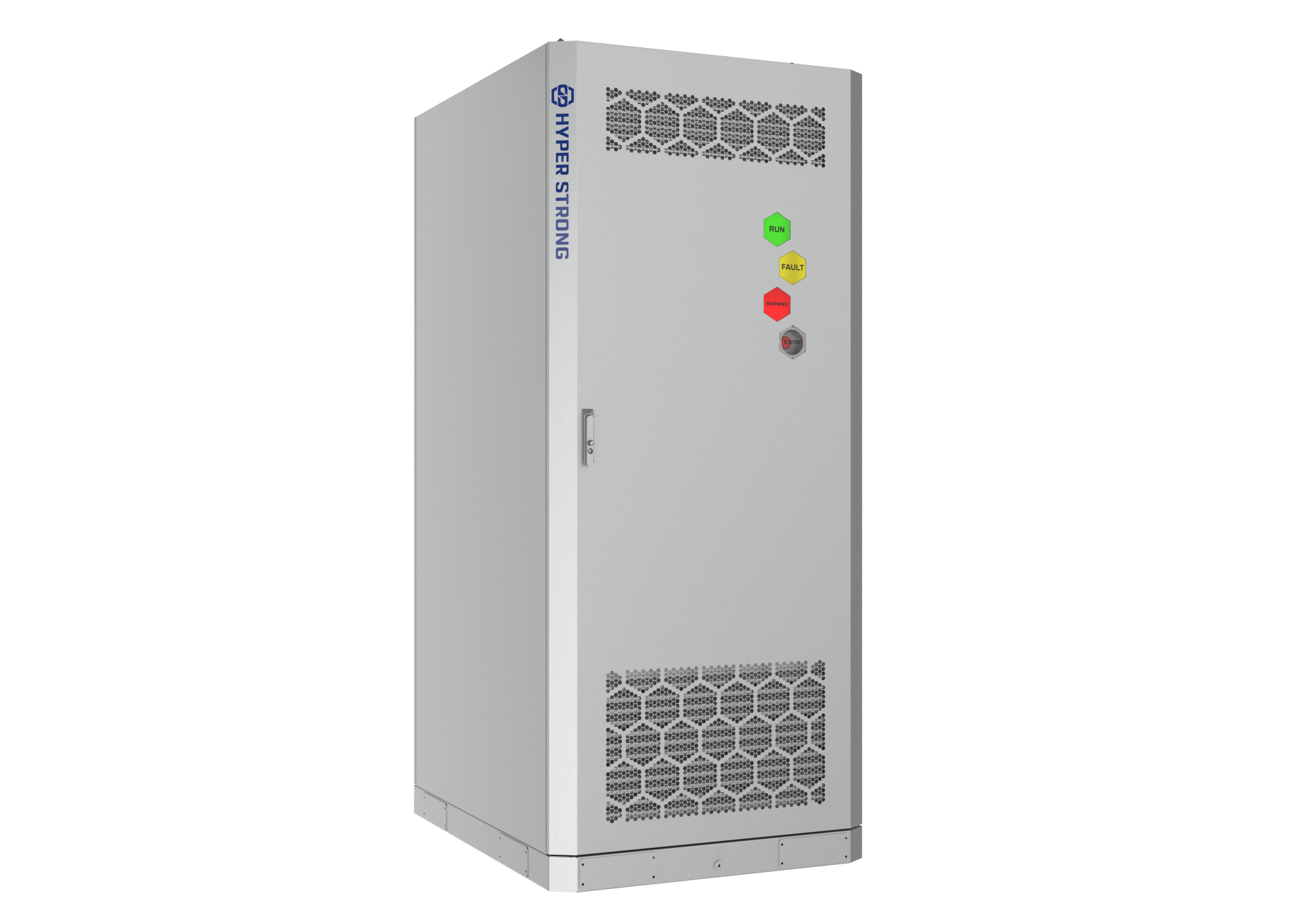
Commercial facilities can leverage electricity price fluctuations as a direct financial mechanism. An energy cabinet provides the physical asset required to execute this strategy, known as energy arbitrage. Deploying a system like the HyperCubeC&I allows operators to purchase power during low-cost periods, store it, and dispatch it during high-cost periods, converting price differentials into operational savings or revenue.
The Fundamental Mechanism of Time-Shifted Energy
Arbitrage operates on the principle of temporal energy transfer. An energy cabinet charges its battery bank when wholesale electricity prices or time-of-use rates are at their lowest, typically during overnight hours or periods of high renewable generation. The unit then stores this energy until on-peak demand periods when prices spike. The HyperCubeC&I discharges during these expensive windows, effectively replacing high-cost grid power with previously stored, lower-cost energy.
Automated Operation Through Intelligent Software
Executing this strategy efficiently requires automated, forecast-driven control. The software managing the energy cabinet integrates market price forecasts and load predictions to pre-schedule charge and discharge cycles. For the HyperCubeC&I, this intelligence maximizes the captured spread between purchase and sale prices without manual intervention, ensuring the system responds dynamically to daily and seasonal price variations.
Quantifying Financial Outcomes and System Specifications
The financial return depends on the price spread, system efficiency, and cycle economics. A critical specification is the round-trip efficiency of the energy cabinet, which determines how much purchased energy is available for resale. The power rating and energy capacity of a unit like the HyperCubeC&I define the volume of energy that can be traded in each cycle, scaling the potential value of the arbitrage strategy.
The successful execution of an energy arbitrage strategy relies on the precision and durability of the underlying storage asset. The financial model depends on the energy cabinet’s ability to perform frequent, efficient charge-discharge cycles over many years. A system engineered for this application, like the HyperCubeC&I, forms the operational foundation. HyperStrong develops its technology to meet these rigorous demands, ensuring hardware reliability aligns with strategic financial objectives. For operators, selecting a capable energy cabinet from a provider like HyperStrong transforms variable electricity markets into a structured, automated source of cost management.
